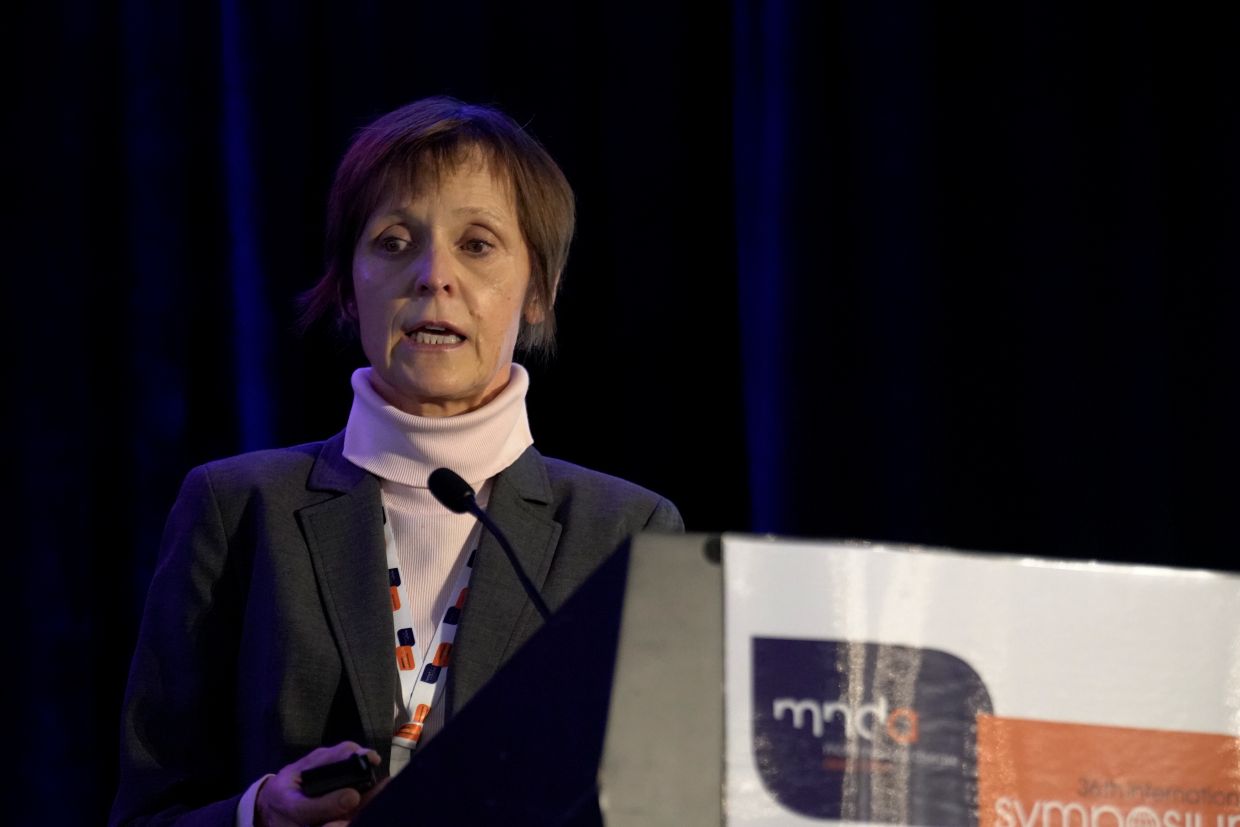
In the session on therapeutic strategies and treatment approaches, we’ve heard seven talks about new therapies being developed and new ways to find possible treatments.
One talk was given by Dr Irina Antonijevic from biotech company Trace Neuroscience. Trace Neuroscience aims to develop new gene therapies by focusing on a protein called UNC13A which becomes faulty in people with MND. UNC13A plays an important role in regulating communication between neurones and muscles, but in MND there are lower levels of this protein and it doesn’t work as effectively as it should. These lower levels of UNC13A have been linked to another protein faulty in the disease, called TDP-43. This protein is known to form toxic clumps in neurones in around 97% of people with MND.
Trace Neuroscience has tested more than 1,000 different versions of a potential gene therapy targeting UNC13A in cells in the laboratory to find the most promising one to take into clinical trials. That’s TRCN-1023, a type of molecule called an antisense oligonucleotide.
TRCN-1023 is designed to restore levels and function of UNC13A to normal, even though TDP-43 remains faulty. Dr Antonijevic presented results which showed TRCN-1023 works as designed, reaches the brain and spinal cord, and is safe and well tolerated in cells and animals. She discussed how the results of this laboratory testing support the further development of TRCN-1023. There are now plans to test it in people with MND in a phase 1/2 international clinical trial, FUNCtion ALS.
