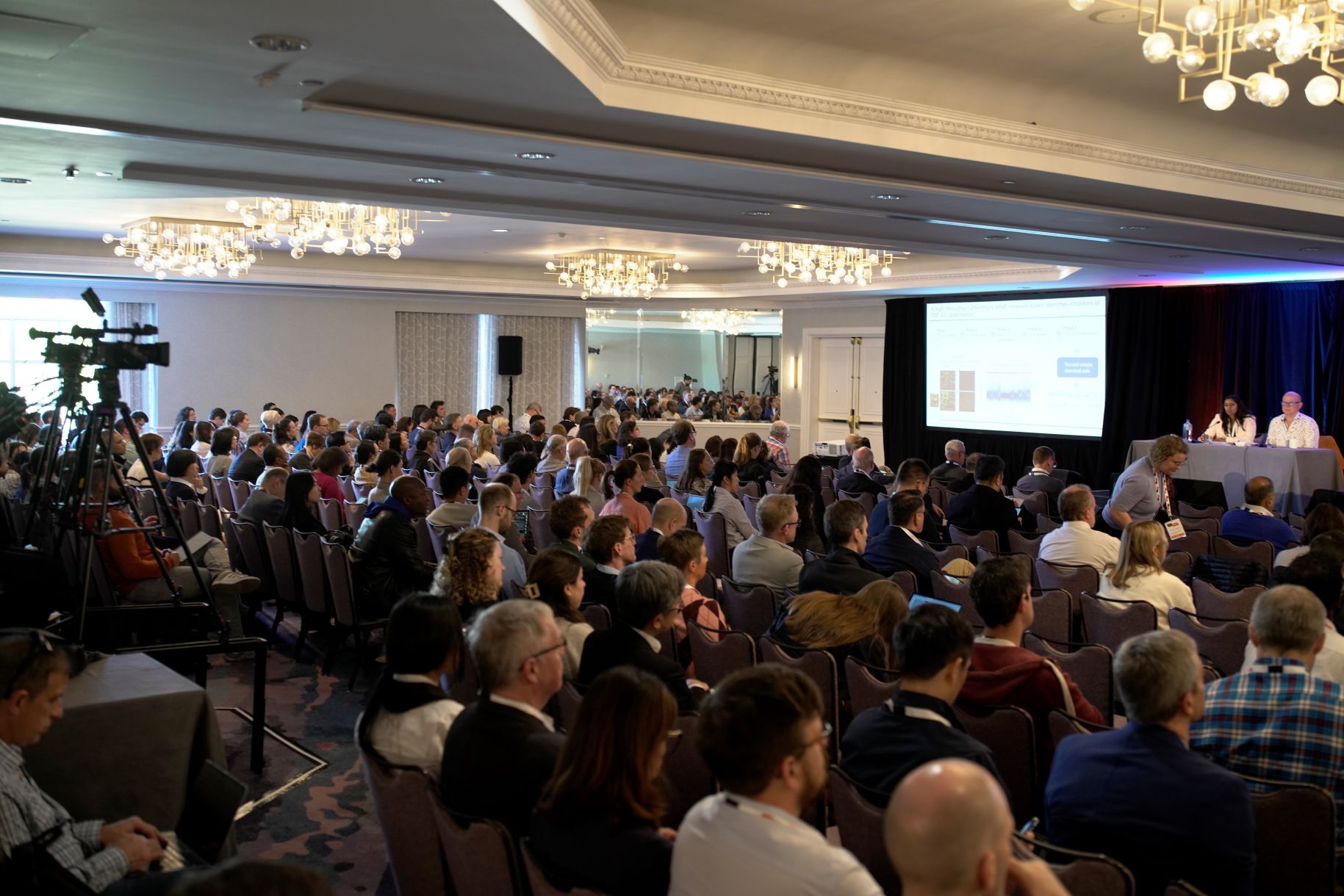
The International Symposium on ALS/MND has closed its doors once again after three insightful, inspiring and hopeful days! After being postponed in 2020 due to the COVID-19 pandemic, we finally made it to the beautiful city of San Diego to bring the global MND community together to share the latest updates in MND research. This December, we were joined by over 1150 delegates both in-person and virtually, from 42 different countries across the world. Over the course of the 3-days we heard 115 platform talks and nearly 300 poster presentations. The community built of clinicians, researchers, health and social care professionals, industry members and patient fellows all came together with the shared passion and hope of finding effective treatments for all people living with MND.
Watch the video below to see some of the highlights from this year’s Symposium!
As in previous years we opened the Symposium with the Steven Hawking Memorial Lecture, a presentation that invites new and innovative ideas outside of the MND field. It offers a new perspective and encourages out of the box thinking by bringing technology used in other fields into MND.
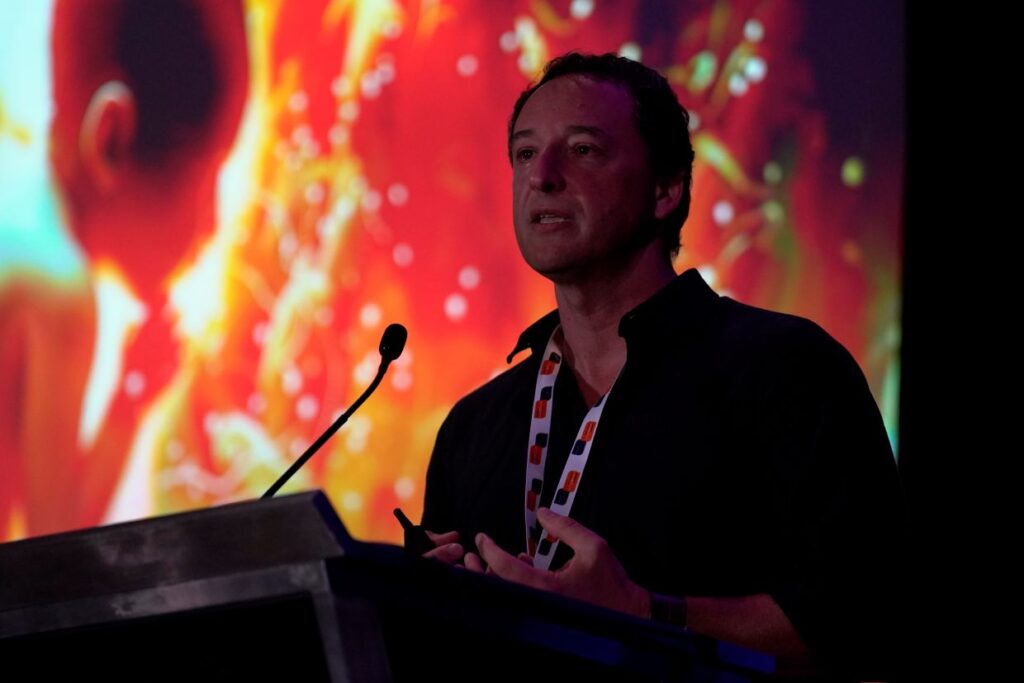
This year we welcomed Professor Alysson Muotri who specialises in a unique method to study stem cells. Alysson grows what is known as a brain organoid or “mini brain”, this is a 3D structure made up of stem cells. He works with the International Space Station (ISS) and sends the mini brains up to the ISS to monitor their growth as they undergo early stages of development, including the development of neurons. It is thought that the higher radiation and reduced gravity in space, can both accelerate aging of the cells. When researching age-related diseases such as MND this is very exciting work as it can age the cells faster than on earth, creating more accurate cell models to study in the lab. This could lead to many new discoveries in neurodegenerative research.
Across the symposium, we had three parallel sessions filled with interesting and cutting-edge talks. For the first time ever, one of these sessions was specific to research into Primary Lateral Sclerosis (PLS), a rare form of MND that affects three percent of people with MND. Several speakers from across the world came to deliver this session, speaking about the biological profile of PLS and understanding why it mostly affects the upper motor neurones and progresses slower than ALS. They gave updates on the diagnostic criteria and its overlap with frontotemporal dementia, biomarkers, outcome measures and more. The session demonstrated the power of global collaborations as it can accelerate research into PLS.
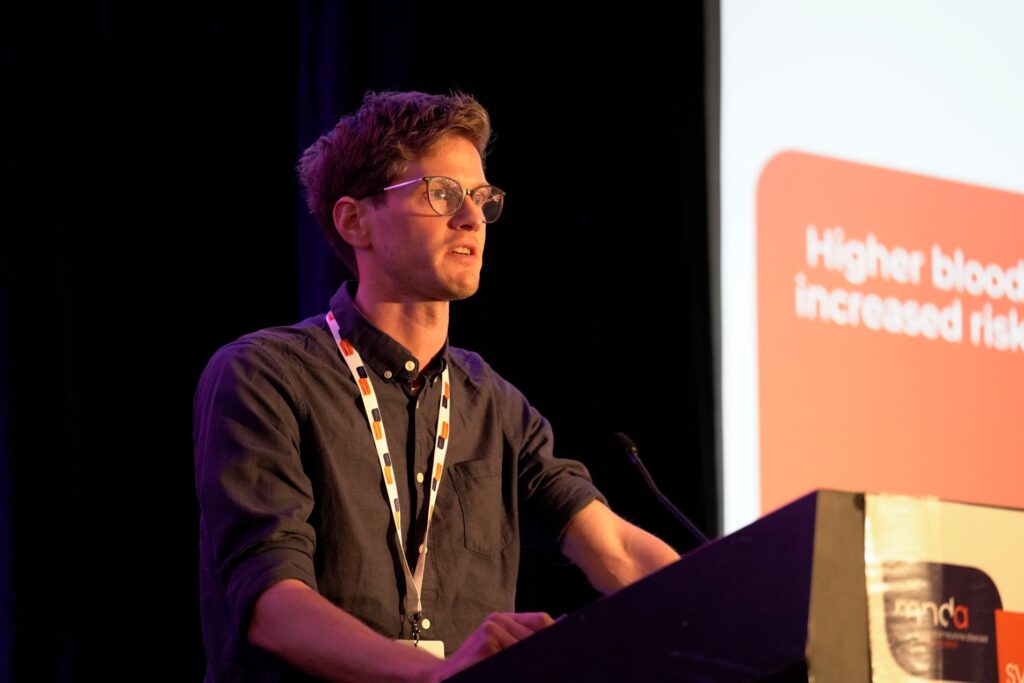
Later talks offered updates on earlier detection and treatment as it is known that the disease will have been damaging the motor neurons well before symptoms occur. The ability to detect and treat people earlier in this process could enable more research into ways of slowing progression earlier or stopping the disease from developing. Researchers in Denmark spoke about their research into possible links between cholesterol and ALS. They found that people with ALS may have higher levels of both LDL (“bad” cholesterol) and HDL (“good” cholesterol) up to 10 years before diagnosis. The research analysed thousands of records and showed a consistent link between heightened cholesterol and ALS risk, suggesting that changes in metabolism might occur long before symptoms appear. These findings could help identify individuals at higher risk and open doors to preventative strategies in the future.
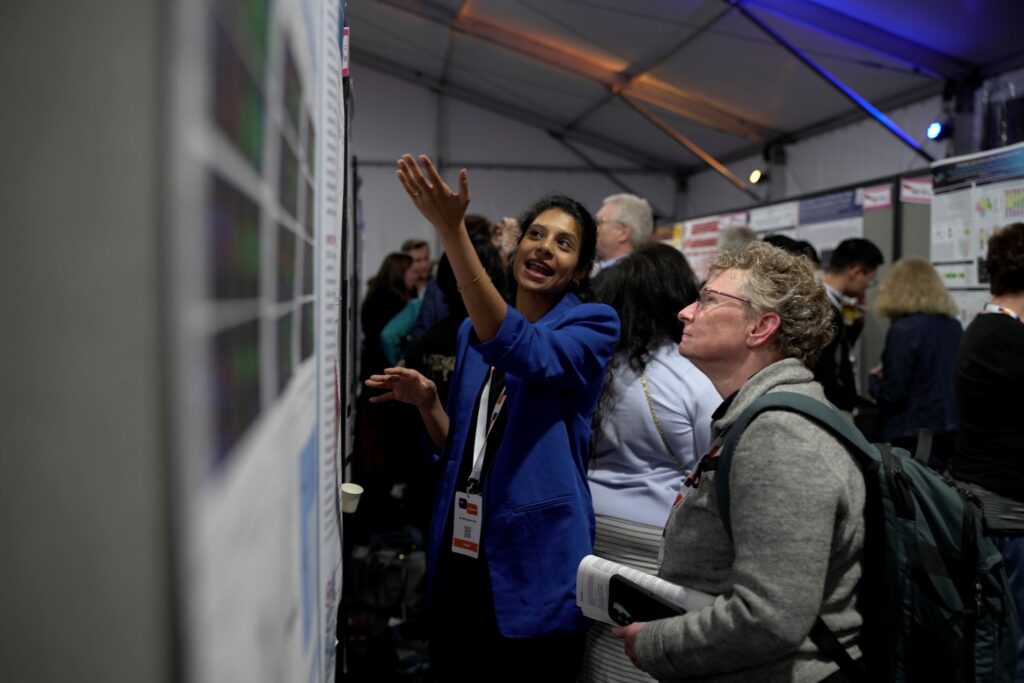
In addition to the platform sessions, we held 3 poster sessions, which were once again buzzing with energy, featuring close to 300 posters that highlighted the breadth and depth of MND research. Topics spanned everything from progressions in healthcare and new biomarkers to cutting-edge technology. The sessions brought together researchers from all corners of the community; from early-career researchers and fellows to established clinicians, healthcare professionals and industry members. These sessions create a vibrant space for exchange of knowledge and opportunities for collaboration and discussion. These sessions offered delegates the perfect opportunity to showcase their own work while discovering insights from peers and leading experts in their field.
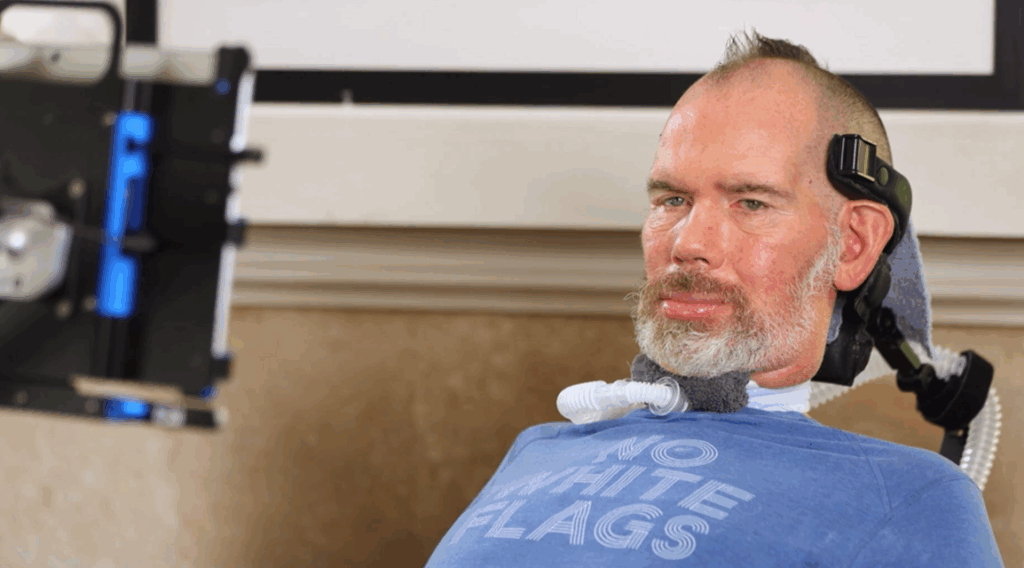
The final talk of the Symposium was delivered remotely by Steve Gleason, a former professional American football player who has MND, and is the founder of an organisation called Team Gleason. This organisation empowers people living with MND to live purposeful lives through providing access to technology, equipment and care. Steve offered an insight on what it is like living with MND from his initial diagnosis in 2011 and how technology improvements are critical to maintaining some independence in his everyday life. Through Team Gleason, he is working to improve assistive technology with big technology companies while keeping costs low to be accessible for people with MND. He ended the Symposium by inspiring everyone in the room to continue the work that they do, saying “Today it might feel like a hair-brained pipe dream. Tomorrow it might revolutionize the world. And if it doesn’t revolutionize the whole world, it will revolutionize the world for someone”.
Our sincere thanks to all the presenters, chairs, speakers, sponsors, exhibitors, volunteers and delegates for making this such a productive, engaging and uplifting event.
Preparations are already underway for next year’s Symposium in Amsterdam , which will mark the 37th International Symposium on ALS/MND. Until then, Steve’s words will be ringing in our ears to “Go set the world on fire”.
