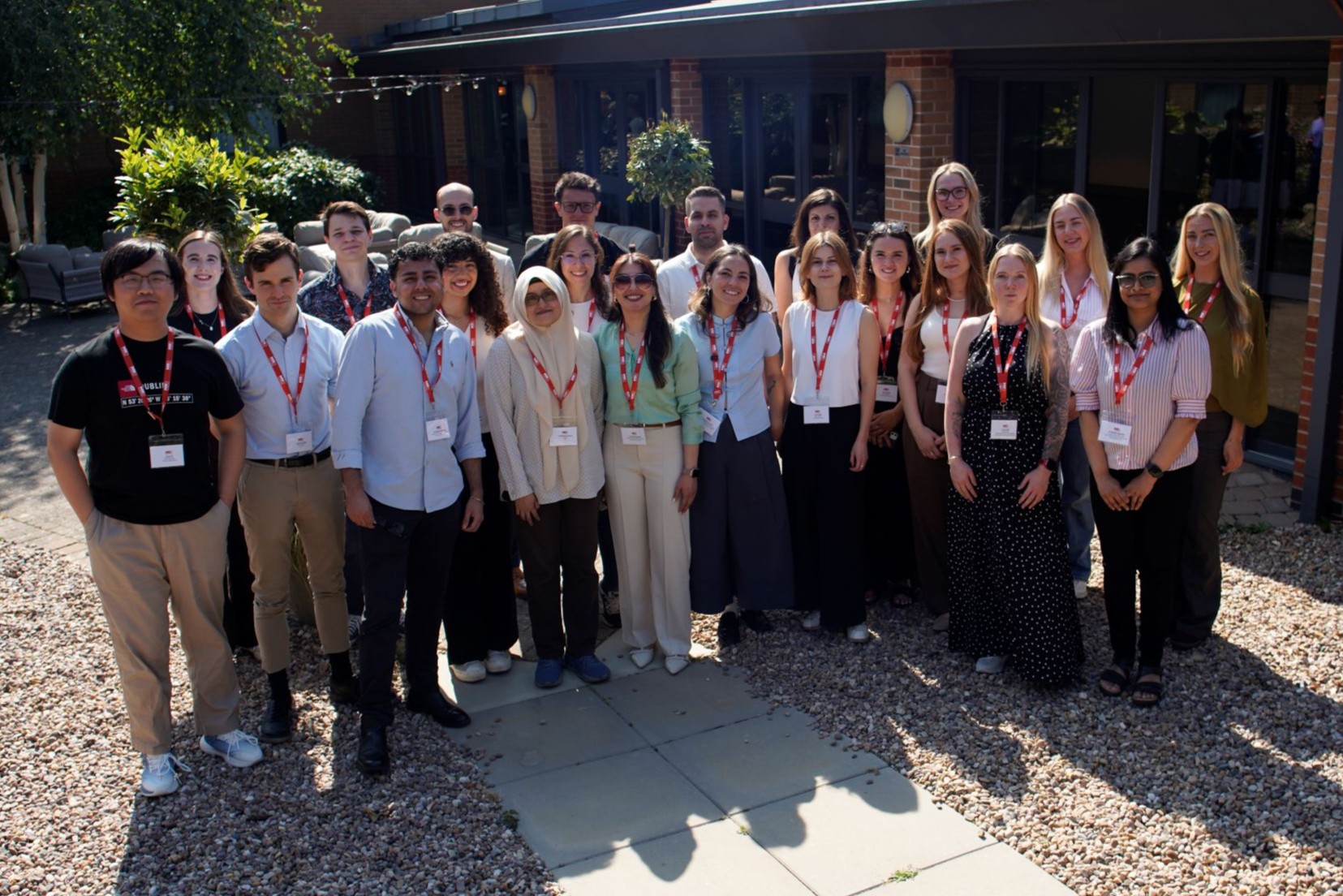
Hello! Libby here, one of our Research Impact Specialists at the MND Association. Before joining the Association, I completed my PhD in MND research at the University of Sussex, and my entire PhD was funded by a generous legacy gift left to our local branch – which is just incredible! During the second year of my PhD, back in 2022, I heard that the MND Association were inviting early career researchers (ECRs) like myself to attend their new event, MND EnCouRage UK. This was a unique event, a one of a kind in the UK, designed to bring together researchers in the early stages of their MND research careers and people living with and affected by MND. The purpose of the event was, and to this day continues to be, to support ECRs in their careers, enhance their skills and to encourage them to stay in the field of MND.
For me, MND EnCouRage was my first opportunity to meet not only other MND researchers at different stages of their careers, but also people living with and affected by MND. I remember being incredibly nervous and excited, and was instantly put at ease in the informal, supportive environment, full of hope and optimism for MND research. The event was incredibly inspiring, and being able to hear the voices and stories of those with lived experience of MND provided me with a renewed sense of motivation and determination that I took back with me to the lab and shared with my research colleagues. The event gave me an insight into the impact of MND on families and was a powerful reminder about the importance of MND research, so that we can push towards effective treatments for MND and improve the quality of life for people living with this devastating disease.
Four years on, I now have the incredible privilege to be able to support the delivery of the event each year, and have just returned from MND EnCouRage UK, 2026. This year, we were joined by 22 ECRs, 11 guest speakers, and a wonderful group of people with and affected by MND. We heard about such a wide range of exciting research being carried out by ECRs across the UK, from using artificial intelligence to help to detect different types of MND, through to a large-scale review of repeat physical trauma as a potential factor in developing MND.
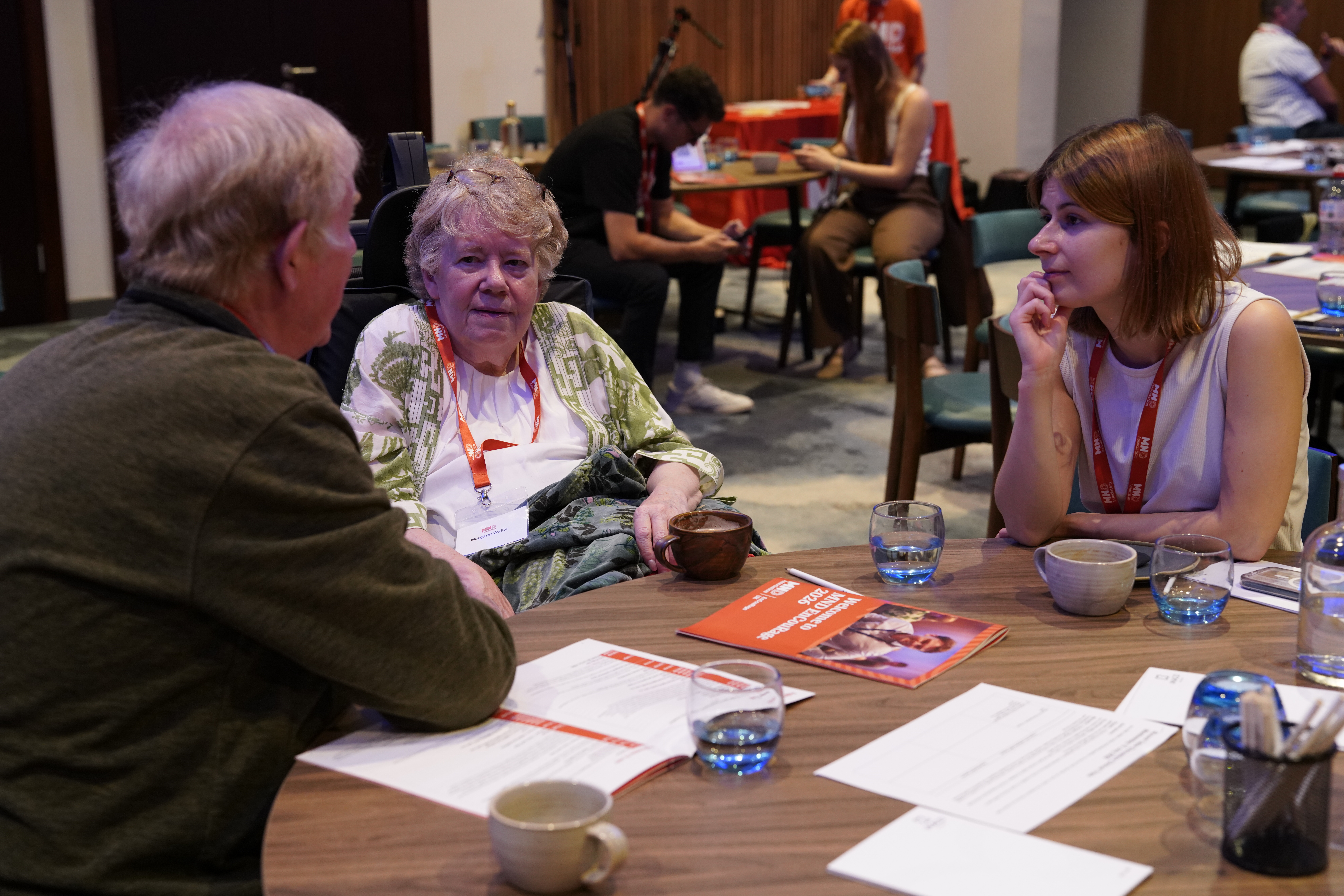
Not only did the event give people with and affected by MND a chance to learn about the latest research being carried out by the ECRs, but it also gave ECRs the opportunity to learn from people living with and affected by MND. From hearing about people’s different research interests, to gaining insights into what life is like living alongside MND, it gave the researchers the opportunity to learn so much from those whose voices matter most. The curiosity, enthusiasm and optimism shared between everyone in the room was incredibly powerful.
Collaboration at EnCouRage
Collaboration is a huge focus of MND EnCouRage. For me, back at MND Encourage 2022, what started out as a small conversation with other ECRs based up in Oxford, turned out to be pivotal in the progress of my PhD. From a small conversation at the event, the ECRs then shared some stem cells from their lab with me, packaged up in a polystyrene box filled with dry ice and sent down from the University of Oxford to the University of Sussex, which enabled me to carry out some more exciting research looking at the effect of very small molecules, called microRNAs, on motor neurones grown in a dish from the stem cells.
And that’s why this year, alongside our usual programme of events, which includes presentation and media workshops for ECRs, a round-table discussion about clinical trial design led by Professor Ammar Al-Chalabi, and of course the 3-minute lightning talks delivered by each ECR to showcase their research to the MND community, we also introduced a new element to this year’s event: give and take. Each ECR was asked to bring with them to the event one challenge they’re currently navigating, and one resource, insight or piece of advice they can offer others. Whether it was related to the lab, writing, work life balance, publishing a paper or something else, this session provided a space for ECRs to network and support each other as they navigate the beginnings of an academic career.
“To know that I’m not alone in the challenges I’m facing… to feel that everyone is in the same boat and that everyone is pulling on the same string to try and help cure MND, is really rewarding.”
– David Orsulik, MND Association funded PhD Student at University College London.
Return of previous ECRs
What made this year’s event extra special was having some researchers who attended previous EnCouRage events, as ECRs, come back and share their wisdom and experience with the new cohort of ECRs. Dr Hamish Crerar attended the very first MND Encourage in 2022. Like myself, he was an ECR studying small molecules called microRNAs. Hamish gave his 3-minute lightning talk about his work on microRNAs just before mine, which was excellent timing as it meant that I was saved the task of explaining microRNAs, which is no mean feat! Hamish joined this year’s ‘from postgrad to professor’ panel, sharing insights into his career as an MND researcher. The team caught up with Hamish after he’d spoken at the career panel, to reflect on his time at MND EnCouRage as a previous ECR and now senior researcher:
Another returning researcher, back to share advice one year on from attending as an ECR, was Dr Katie Hanna. Katie has had a busy year in MND research, and we caught up with her at the event:
We would like to say a huge thank you to everyone involved in making MND EnCouRage UK 2026 happen. Firstly, a big thank you to all the senior researchers and clinicians who took time out of their busy schedules to attend, share advice, and offer guidance to ECRs. Secondly, to Dr Jamie Gallagher, who delivered a brilliant workshop to ECRs about delivering presentations in a powerful way.
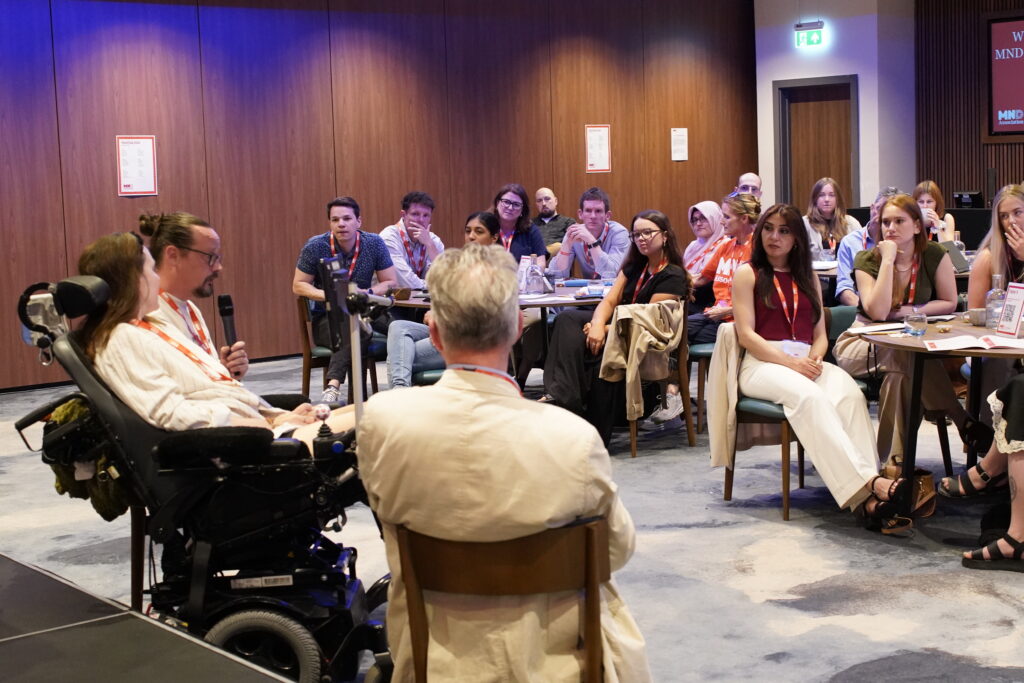
Thirdly, to Anna and Martyn Barrow, who joined us again this year for our ‘real-world perspectives on MND’ session and shared their evolving MND journey. The honesty, positivity and openness with which they gave insight into their lives alongside MND left a truly lasting impression on everyone in the room.
And finally, thank you to all of the ECRs and people with and affected by MND who attended and contributed to the event this year, each of you helped to make the event a great success!
