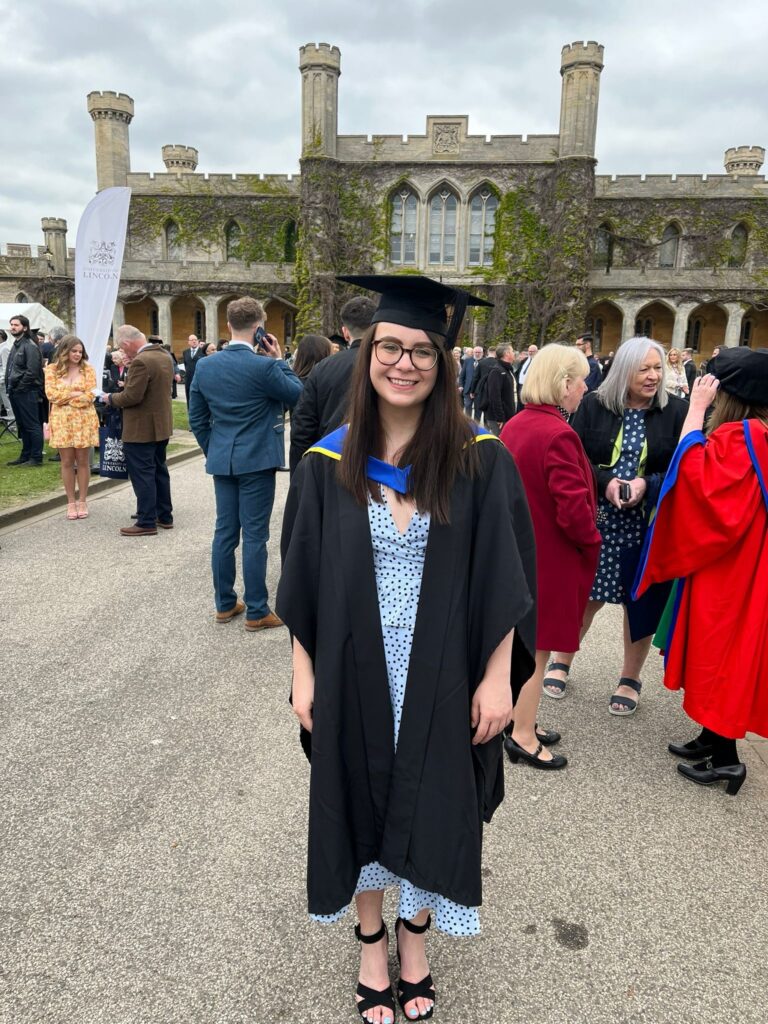
Hi! My name is Beth, and I’m delighted to have joined the MND Association as the new Research Engagement and Involvement Manager.
In this role, I’ll be working to ensure that the voices and experiences of people with and affected by MND help shape our research, while also leading engagement opportunities to strengthen collaboration across the MND community.
When I tell people my job title, I often get asked “what is research engagement and involvement?” Although the two terms are often used together, they mean different things. However, both are essential if we want research to make a difference for people living with and affected by MND. Before I explain more about that, I thought it would be nice to tell you a little bit about how I got here.
I studied Psychology at the University of Lincoln, where I developed an interest in cognition in dementia. Cognition is the way we think and understand information. It can include things like how we communicate, how we see things, how we remember, and how we pay attention.
After graduating, I became a Research Assistant on a National Institute for Health and Care Research (NIHR) funded project called the Cognitive Daisy.
The project explored how we could better understand a person’s cognition through a series of interactive games.
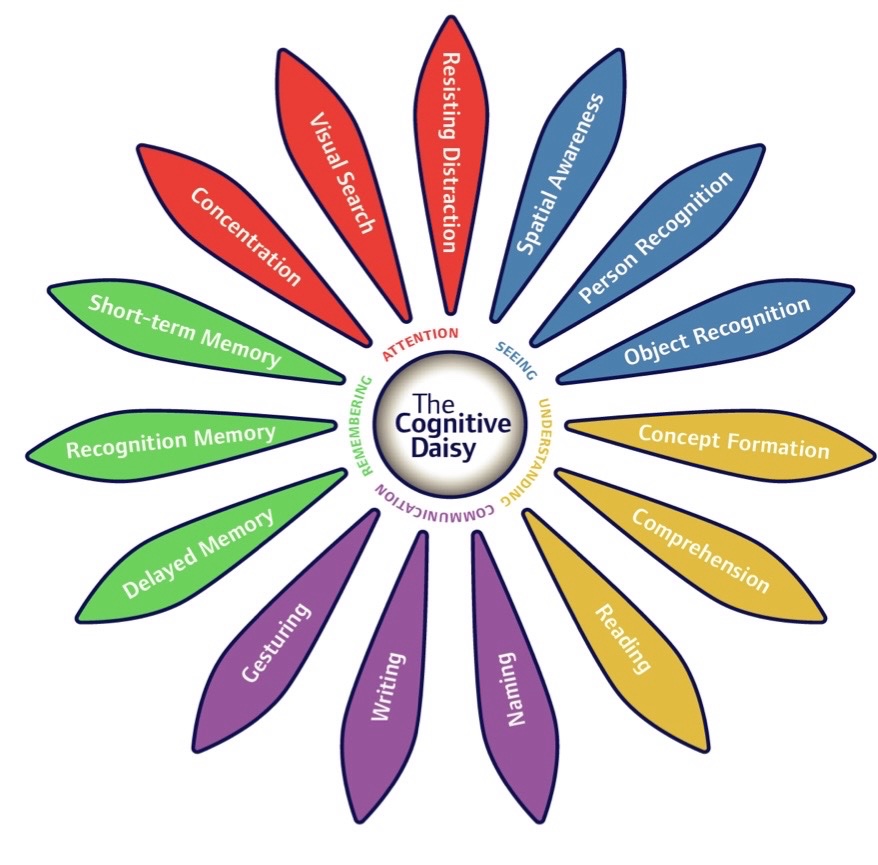
The idea was to create a visual picture of someone’s cognitive strengths and difficulties, in the shape of a daisy, that could be shared with care home staff. For example, someone might have difficulty with face recognition, which is the ability to recognise a person specifically from their face. This could affect everyday situations, photographs, or even recognising their own face in a mirror.
Understanding this could make a real difference to the way someone is supported. In this situation, care staff could help the resident by saying their name as they approach, or draw attention to something distinctive about themselves, such as their hair colour or an item of clothing. Small changes like this can really help someone recognise the person supporting them.
This was my first experience of seeing how research has the potential to improve people’s lives, and it sparked my passion for making research more meaningful and accessible.
Like many working in research, my role came to an end when the project funding finished. I was fortunate to join the NIHR Clinical Research Network (CRN) as a Communications and Patient and Public Involvement (PPI) Officer. PPI is about carrying out research ‘with’ or ‘by’ the public, rather than ‘to’, ‘for’, or ‘about’ them. It means working in partnership with patients and the public, to shape research from beginning to end.
This is so important because the people living with a health condition are the experts in what it is like to live with it every day. Their experiences help ensure research focuses on what really matters and ultimately delivers better outcomes.
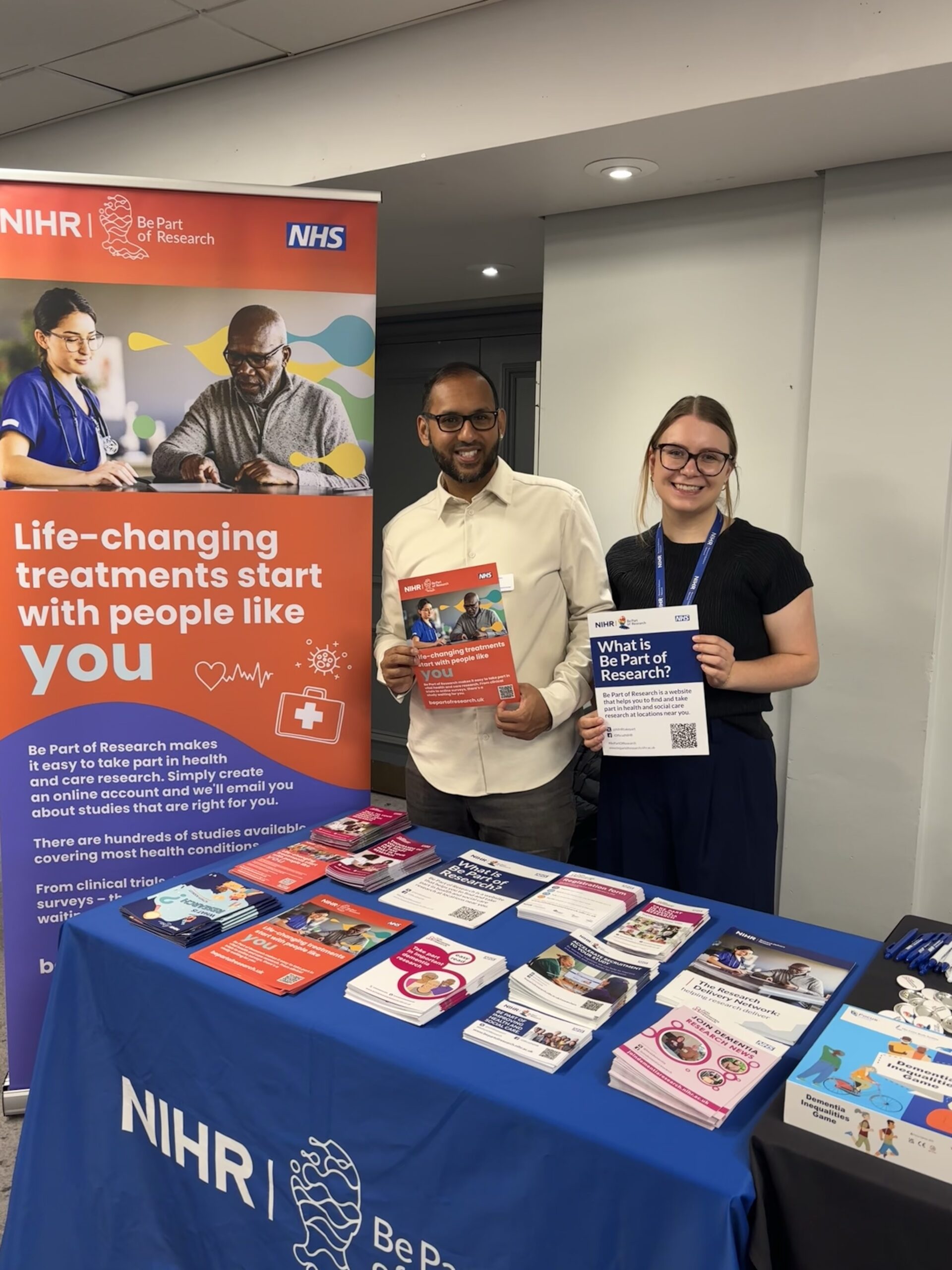
When the NIHR CRN became the Research Delivery Network (RDN), I moved into a new role as a Research Engagement and Inclusion Facilitator. I absolutely loved this job because it focused on increasing opportunities for people from underrepresented communities to take part in a wide range of health and social care research.
Research participation doesn’t always reflect the diversity of people affected by different health conditions. Some communities face barriers that make it more difficult to take part in research, meaning that studies don’t always represent the populations they are intended to benefit. By making research more inclusive, we can generate better treatments and diagnostic tools that work for more people.
Although involvement and engagement are closely linked, they are not the same thing. Research involvement is about giving people with lived experience an active role in shaping research. This could include helping to decide what research projects should receive funding, or working alongside researchers to help shape how a study is designed. Research engagement, on the other hand, is about sharing knowledge, raising awareness, and creating opportunities for conversations about research.
Both principles are reflected throughout the MND Association’s research strategy. The strategy commits to involving people with MND at every step. One way we hope to do this is by developing an inclusive online community where people with MND can share their experiences and ideas to help shape our research initiatives and the way we work.
The strategy also recognises the importance of backing the brightest minds throughout their research careers. One project I’m particularly looking forward to leading is EnCouRage, which brings together Early Career Researchers (ECRs), senior researchers, and people with and affected by MND from across the MND community. The initiative supports ECRs to develop their skills, build networks, and continue their careers in MND research.
EnCouRage also creates opportunities for people with MND to hear about research as it develops, talk directly with ECRs, and share their own perspectives and experiences. It gives them the chance to understand the progress being made in MND research and to help researchers understand what matters most to the MND community.
When I saw this role advertised, it immediately felt like the role I had been working towards. MND has touched my own family. My uncle sadly passed away from the disease when he was just 34 years old. He is pictured here with me as a baby! Like so many families affected by MND, we were brought together through this incredibly difficult time, and his memory remains a very important part of our lives.
Being able to contribute, even in a small way, to improving the lives of people with MND is a privilege. As I begin this new role, I am excited to play a part in bringing together researchers and people with lived experience, towards a shared goal. To a world free of MND.