Reading Time: 2 minutesA few months ago we received an email from a young researcher called Amanda Dean who is working towards a PhD and wanted to know
Search Results for: mnd register
Reading Time: 5 minutesIn this guest blog written by Harry Bowles and Sarah Opie-Martin from King’s College London they discuss their MND research poster which was presented at
Reading Time: 4 minutesThis is blog number 18 in our ‘Symposium Blogathon’ – counting down to the 32nd International Symposium on ALS/MND. Numbers in bold green type correspond
Reading Time: 6 minutesThis blog is part of the ‘Virtual Highlights’ collection of articles, where you can read about the content of some of the talks and posters
Reading Time: 3 minutesAs I settle into my role as the Research Programmes and Partnerships Manager with the MND Association, I would like to take the opportunity to
Reading Time: 3 minutesOver 100 talks were given at this month’s International Symposium on ALS/MND in Dublin. There were also over 450 posters of research being presented too.
34th Symposium: Basel Causes and disease mechanisms Clinical Trials Genetic Research MND Research Symposium Treatments
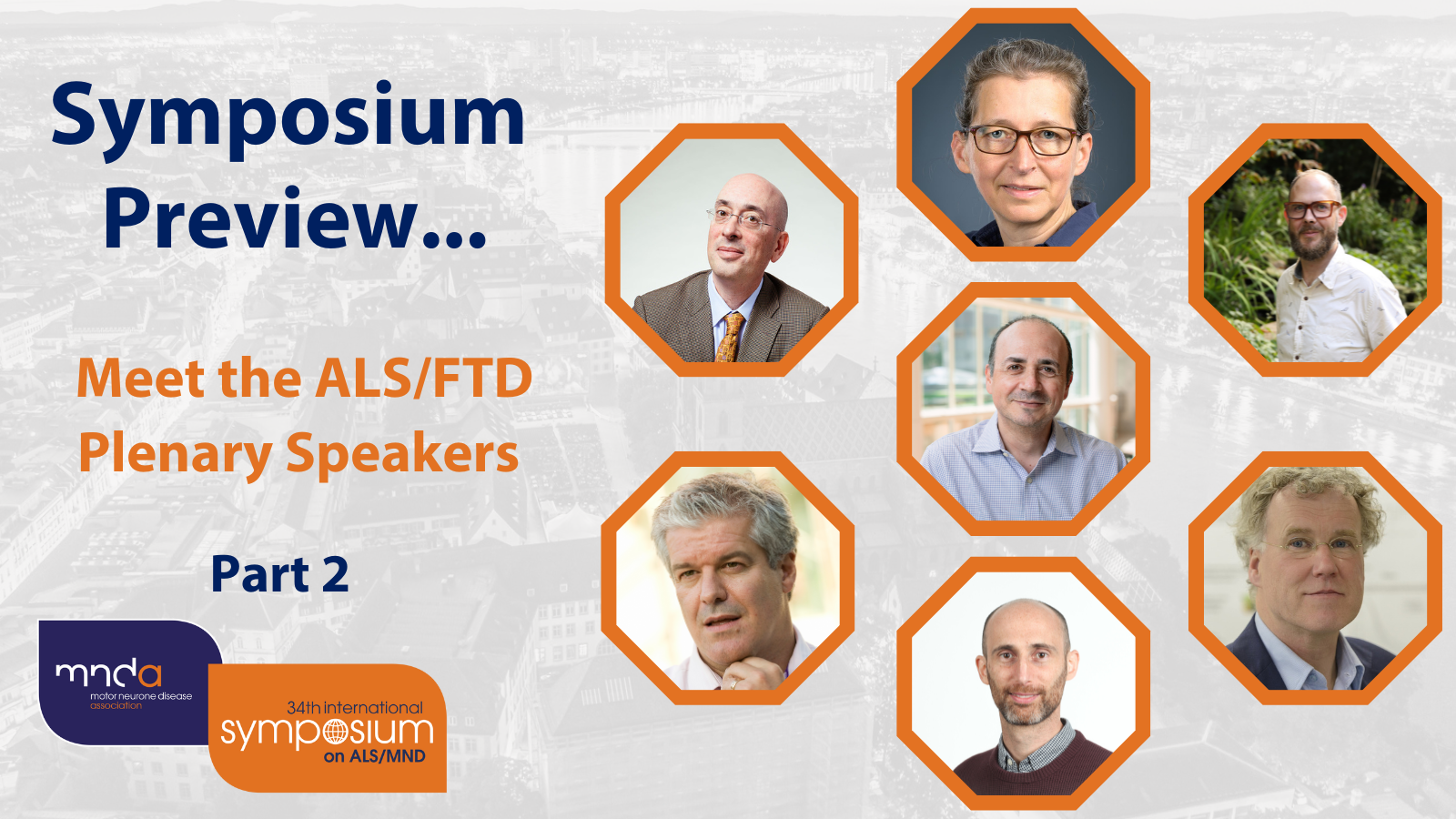
Symposium Preview: Meet the ALS/FTD Plenary Speakers…Part 2
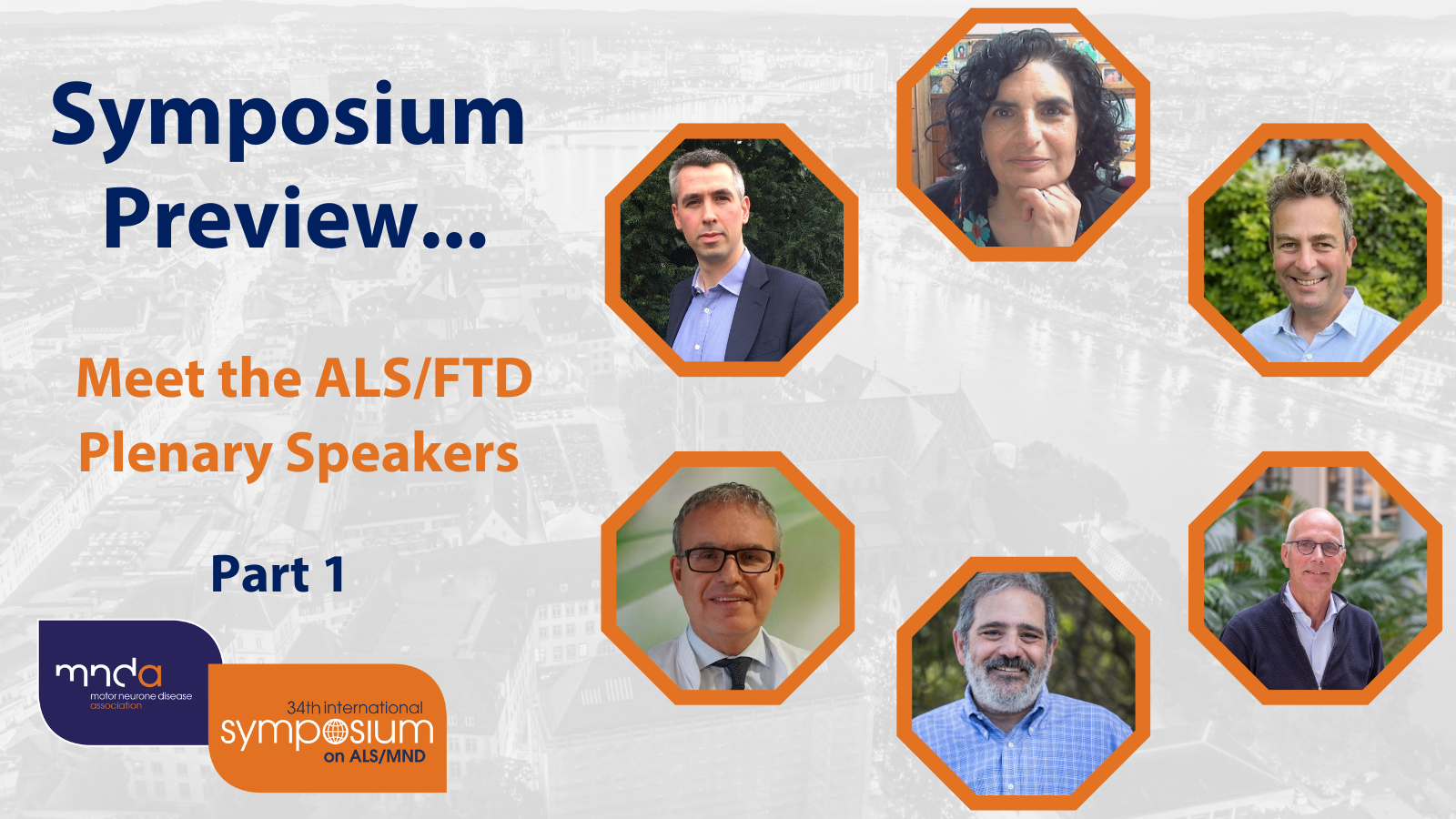
Reading Time: 5 minutesEvery year, the team works hard to build on the previous year’s success. This year we are excited to include a series of three ALS-FTD joint sessions, in collaboration with the International Society for Frontotemporal Dementias, in the programme. To give you a teaser of what is to come, we are taking a closer look at the plenary speakers in the ALS-FTD sessions at the Symposium. In this blog, we explore the topics they will be presenting and find out a little more about the speakers.
34th Symposium: Basel Causes and disease mechanisms Markers of Disease Progression MND Research Symposium
Symposium Preview: Meet the ALS/FTD Plenary Speakers…Part 1
Reading Time: 5 minutesEvery year, the team works hard to build on the previous year’s success. This year we are excited to include a series of three ALS-FTD joint sessions, in collaboration with the International Society for Frontotemporal Dementias, in the programme.
Some people with ALS, the most common form of MND, also develop a form of dementia known as frontotemporal dementia (FTD). FTD is a group of disorders where the nerve cells in two sets of lobes (frontal and temporal) in the brain are damaged. In a similar way to how motor neurones break down in MND and cause loss of function in muscles, the damage to the nerve cells in FTD causes the connections between parts of the brain to break down. As more cells become damaged and die this can lead to symptoms such as problems with memory, thinking or language, changes in mood, emotions and behaviour.
34th Symposium: Basel Causes and disease mechanisms Clinical Trials Genetic Research Healthcare Markers of Disease Progression MND Research Models of MND Research we fund Symposium Treatments
Symposium Preview: Meet the Symposium Communications Ambassadors
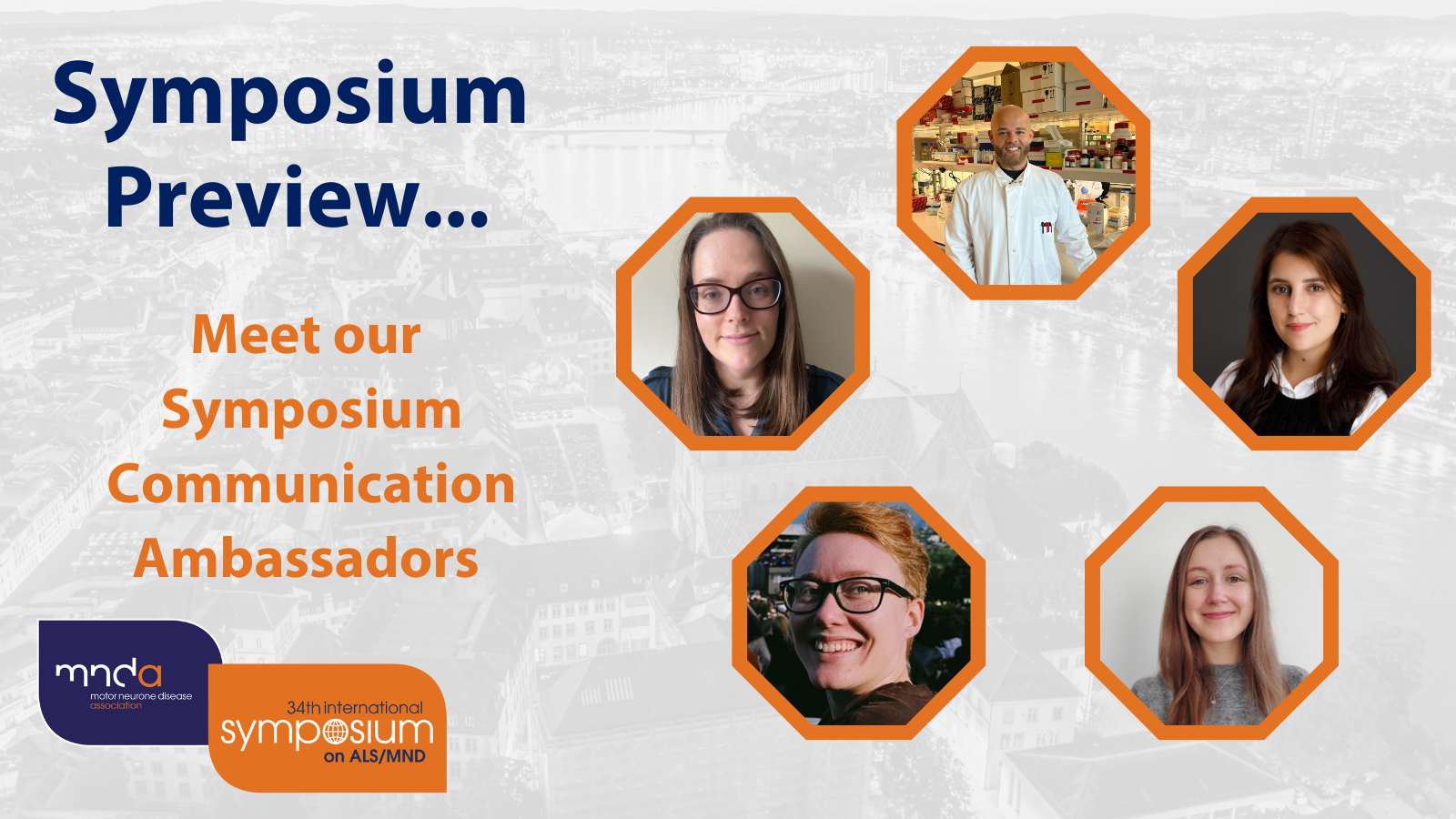
Reading Time: 7 minutesEach year at the Symposium, there is a huge amount of research presented on a range of topics from across the globe. With the Symposium returning to an in-person event this year, we are keen to increase the number of updates we share for those not able to attend, including people living with and affected by MND.
To help us do this, we have launched a new Symposium Communications Ambassador Programme so we can bring more of the research from the Symposium to non-scientific audiences. This programme was open for applications from early career researchers working in MND, who were interested in helping us shine a light on MND research happening across the world. This year we have 5 early career researchers taking part in the Programme, who will gain experience and new skills in communicating research to different audiences. Before, during and after the Symposium our Ambassador’s will be helping us to share the latest research with the MND community.
Reading Time: 3 minutesWhen you think of scientific research most people will immediately imagine a laboratory with scientists in white lab coats, however MND research takes many forms. As well as research that looks for effective treatments, it is also important to investigate ways to improve the well-being of people living with MND and their carers/family members.